PhD Research · Keele University & UHNM NHS Trust

Bedside Clinical
Guidelines

A mobile iOS application delivering evidence-based clinical guidelines at the point of care — co-designed with NHS clinicians.

5 peer-reviewed papers  ·  15 usability recommendations  ·  Deployed within NHS Trust

Background

Clinical knowledge doesn't always reach the bedside.

This project began as Dr. Mitchell's PhD at Keele University, conducted in close collaboration with University Hospital North Midlands NHS Trust. Working alongside respiratory physicians, nurses, and junior doctors, the core challenge was clear: NHS clinical guidelines are lengthy, poorly structured for mobile reading, and often inaccessible in the moments clinicians actually need them.

The solution was not to simply digitise a PDF. It was to understand how clinicians actually work — at the bedside, under time pressure, often without reliable Wi-Fi — and design from that reality outwards.

The result was the Bedside Clinical Guidelines (BCG) iOS app, developed through a rigorous User-Centred Design process and evaluated across five published studies.

9:41

Clinical Guidelines

Chest Pain

Cardiology

Sepsis Protocol

Critical Care

Anaphylaxis

Emergency

AKI Management

Nephrology

Falls Risk

Patient Safety

Methodology

The User-Centred Design Process

Every design decision was grounded in direct engagement with the clinical environment. Five interconnected phases shaped the final application.

1

Contextual Inquiry

The project began not at a desk, but on the ward. Dr. Mitchell spent extended periods working at UHNM, shadowing respiratory physicians, nurses, and junior doctors during clinical rounds. The goal was to understand the authentic context of guideline use: when clinicians reached for information, what interrupted them, how they navigated existing resources, and where current systems failed.

This revealed critical constraints invisible from the outside — unreliable ward Wi-Fi, gloved hands, bright overhead lighting, and the reality that a clinician has seconds, not minutes, to find an answer at the bedside.

Ward observation Stakeholder interviews Task analysis Requirement elicitation
2

Card Sorting

Before a single screen was designed, the information architecture needed to reflect how clinicians mentally organise clinical knowledge — not how it appears in the source guidelines. Card sorting exercises were conducted with NHS clinicians, asking them to group and label guideline content into categories that felt natural to them.

The results directly shaped the navigation taxonomy of the app: top-level categories, the grouping of related guidelines, and the hierarchy that determines how quickly a user can reach the right content under clinical pressure.

Open card sort Closed card sort Information architecture Navigation taxonomy
3

Iterative Prototyping

Design proceeded through multiple rounds of prototyping, from low-fidelity paper wireframes to high-fidelity interactive mockups. Each round was developed collaboratively with clinical participants, incorporating feedback before advancing to the next fidelity level.

Key design decisions — typography choices for ward lighting conditions, tap target sizes for gloved use, the presentation of structured clinical content, and visual hierarchy within individual guidelines — were all refined through this iterative cycle rather than assumed from desktop conventions.

Paper wireframes Digital mockups Co-design sessions iOS prototyping
4

Usability Testing

Formal usability evaluations were conducted at each major design stage, with NHS healthcare professionals completing representative clinical tasks on the app. Evaluations used established instruments including the System Usability Scale (SUS) and think-aloud protocol, with task completion times and error rates recorded.

A notable methodological contribution was the use of physiological signals — skin conductance, heart rate variability — as objective measures of quality-of-experience during interaction, reported in one of the five publications.

Across all evaluation rounds, the work produced 15 usability recommendations specifically for delivering clinical guidelines on mobile devices.

System Usability Scale Think-aloud protocol Physiological signals Task-based evaluation
5

Deployment within the NHS Trust

Following iterative refinement, the BCG app was deployed within University Hospital North Midlands NHS Trust, making it available to clinical staff on their iOS devices. The deployment validated the end-to-end pipeline: from contextual understanding of clinical needs, through structured design and evaluation, to a live tool in active clinical use.

The app operates fully offline — a direct response to the contextual inquiry findings — ensuring that network instability on hospital wards does not interrupt access to critical guidance.

NHS Trust deployment Offline-first architecture iOS native app Clinical validation

The App

Designed for the ward.

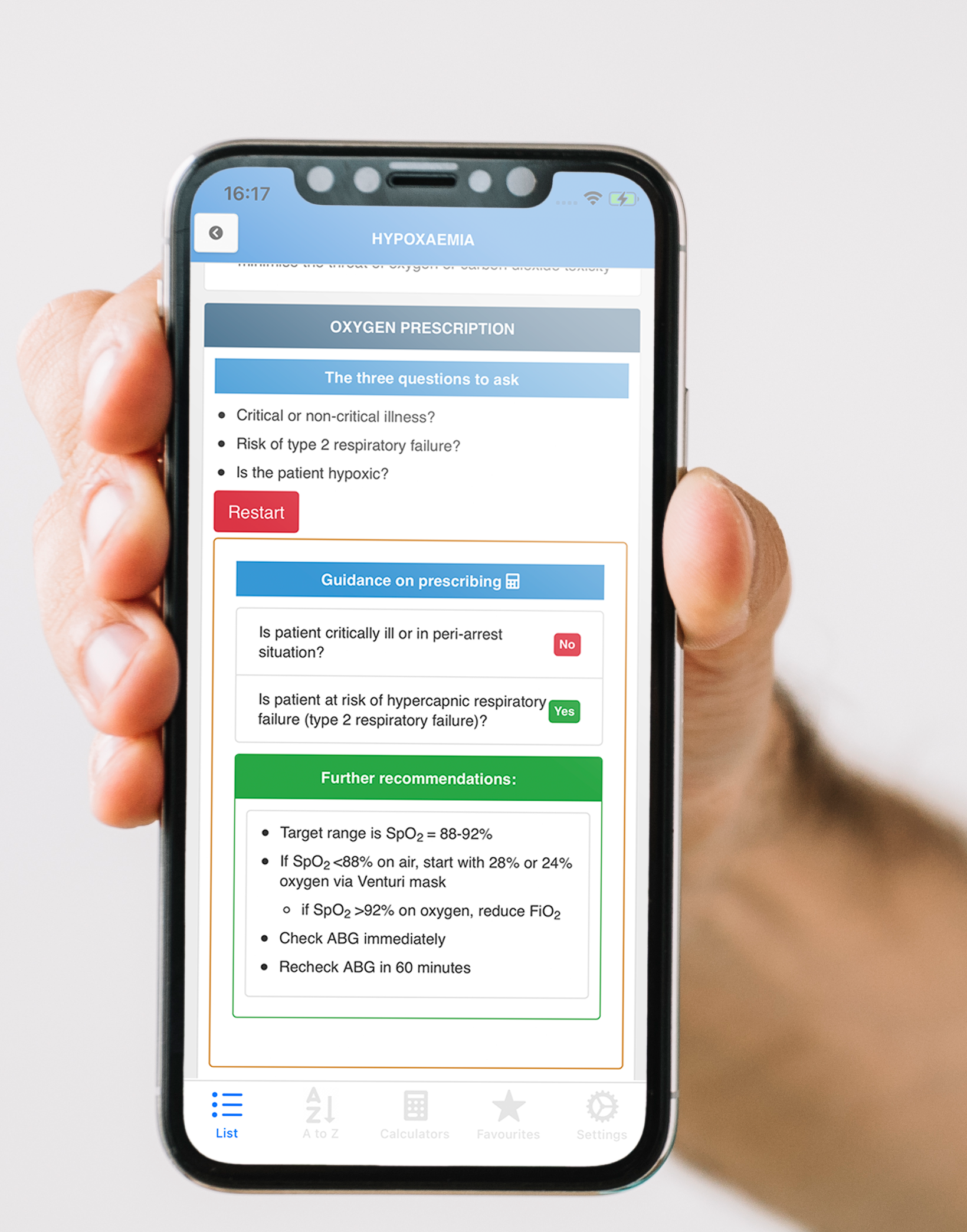
Every feature was shaped directly by what clinicians told us during the UCD process.

9:59
Medical Guidelines
Filter Guidelines by Name or Section...
Fluids and Electrolytes
Hyperkalaemia
Hypokalaemia
Hypomagnesaemia
Cardiovascular
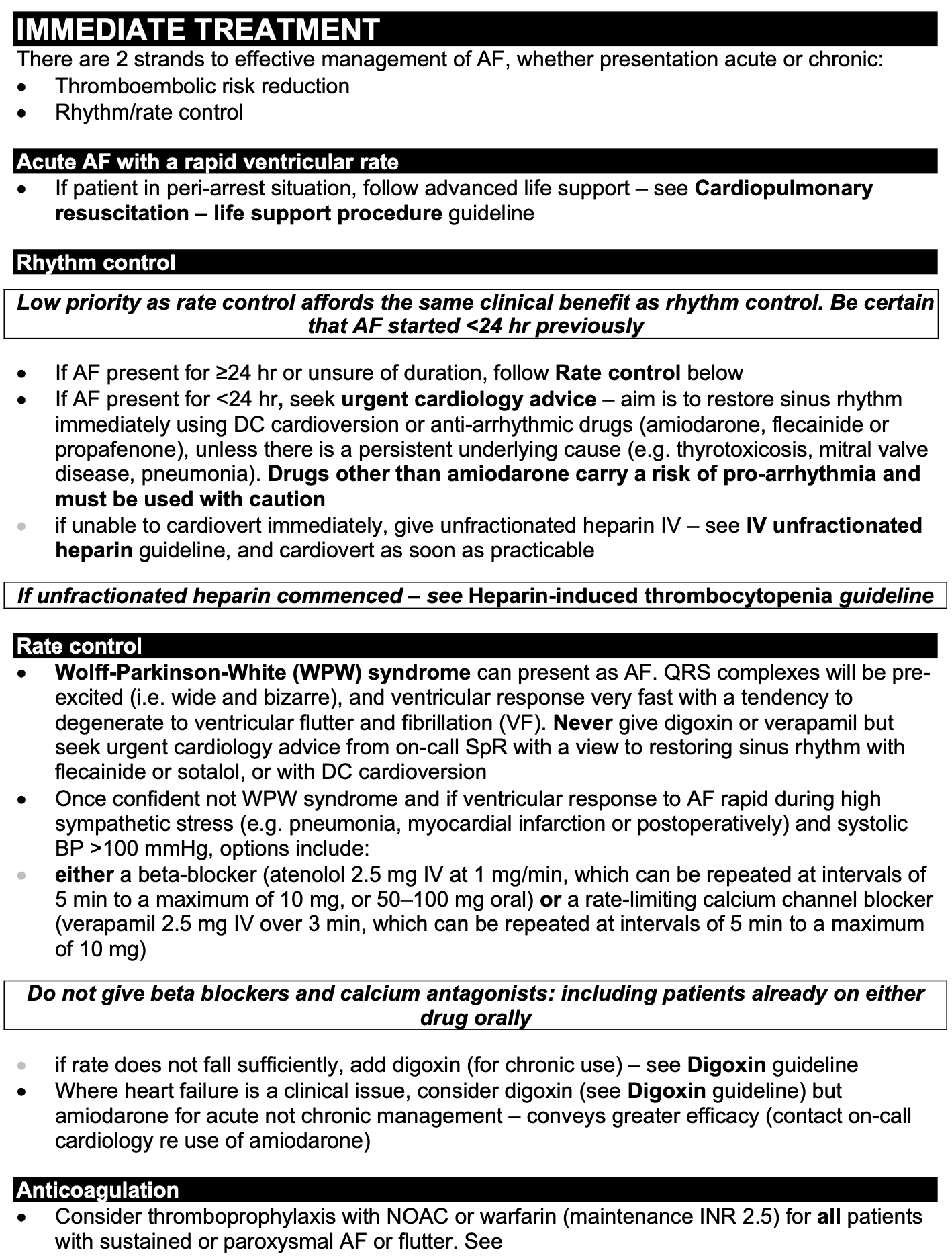
Acute Heart Failure
Acute Myocardial Infarction
Atrial Fibrillation
List
A to Z
Calc
Favs
Options

01 — Navigation

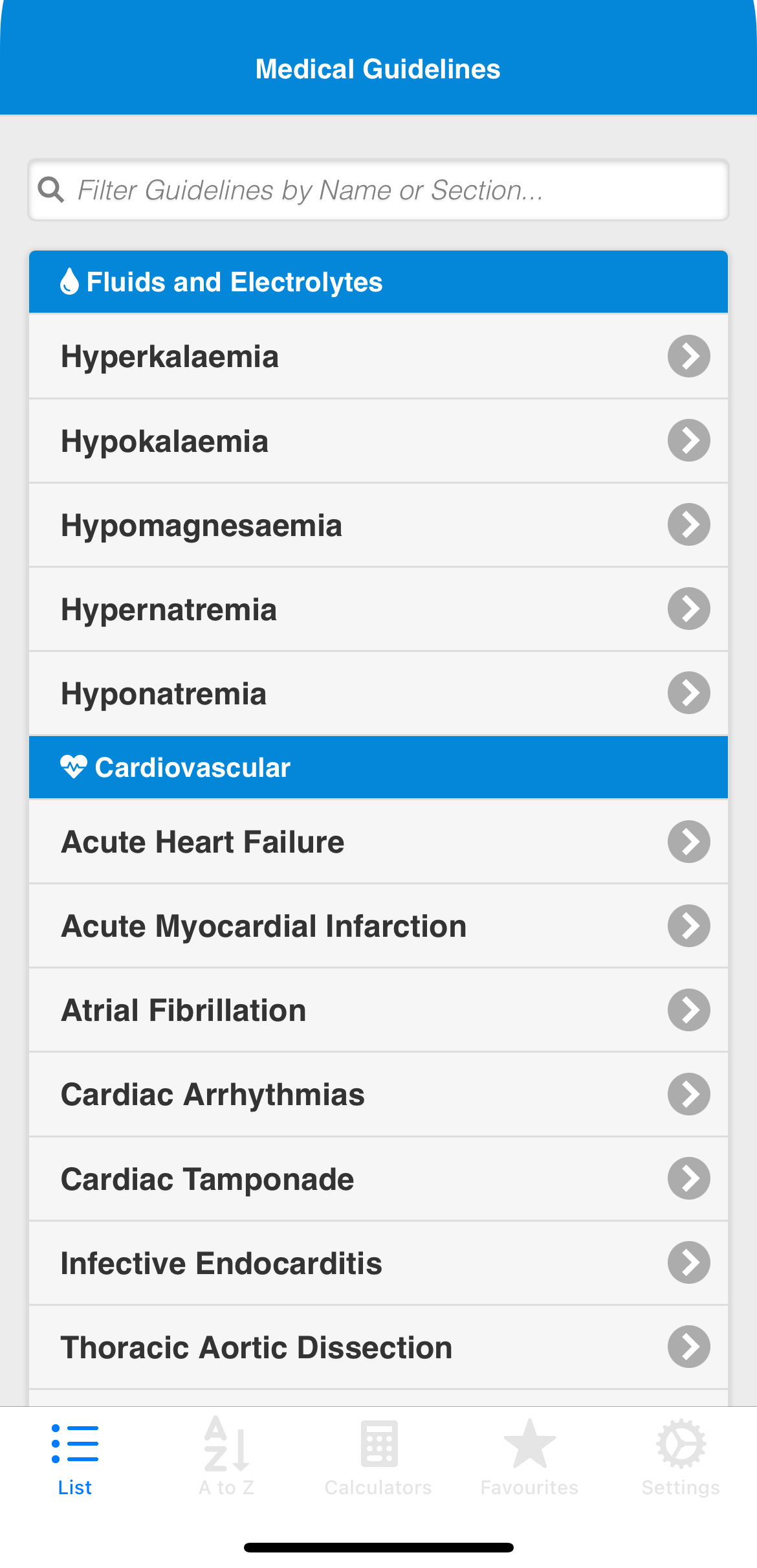
Reach any guideline in 2–3 taps.

Card sorting with NHS clinicians shaped the navigation taxonomy — categories that reflect how clinicians actually think, not how guidelines are filed. The two-level hierarchy was a direct output of the card sort data.

9:57
HYPERCALCAEMIA
Search to filter sections
Recognition and Assessment
Symptoms and signs
• Unusual unless calcium >3.0 mmol/L
• GI: nausea, vomiting, constipation
• Renal: polyuria, polydipsia
• CVS: hypertension, altered QT interval
Initial Management
List
A to Z
Calc
Favs
Options

02 — Search

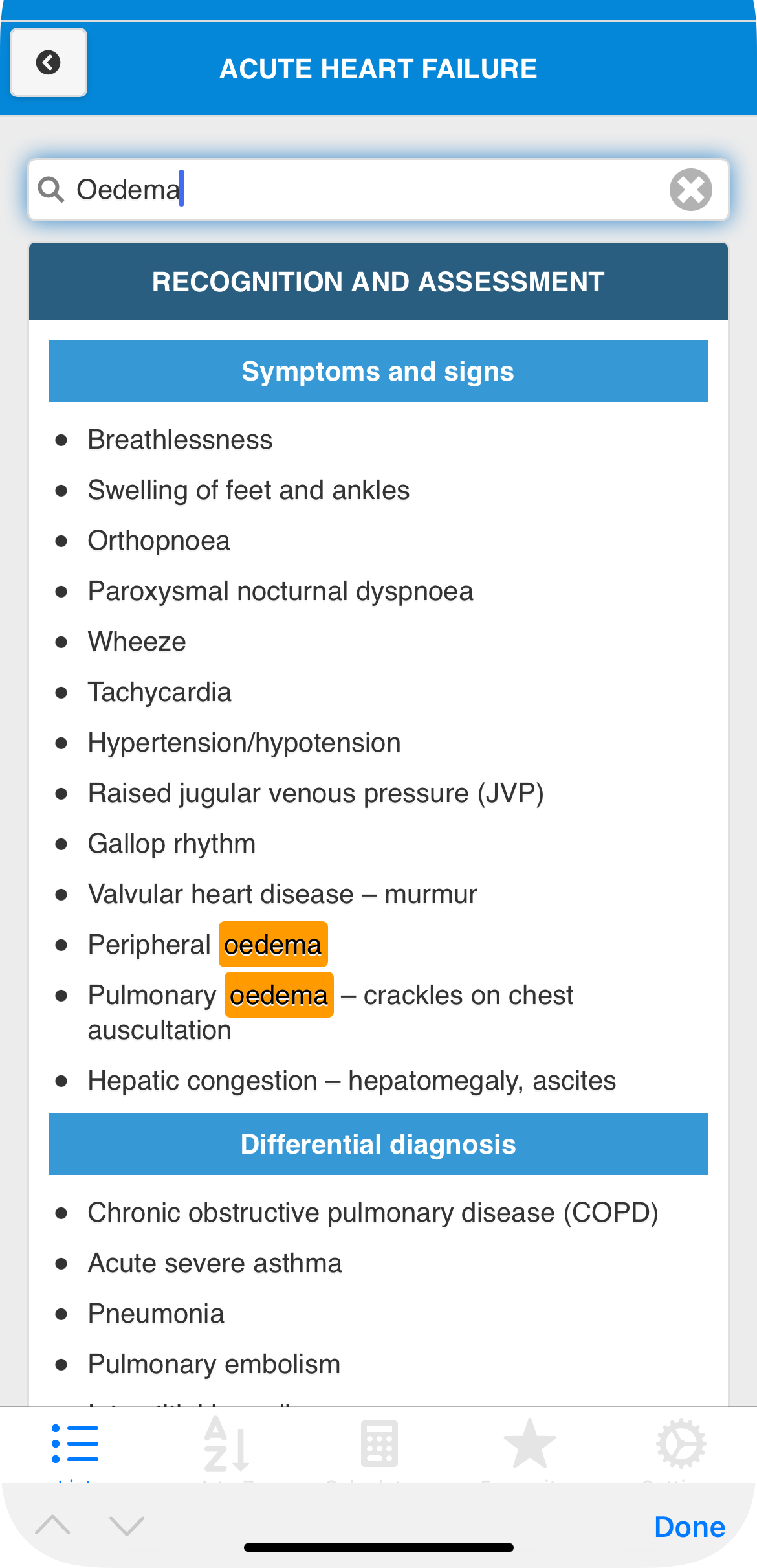
Finds the answer, not just the document.

Full-text search highlights matching terms in context — clinicians can scan the relevant passage without reading the entire guideline. Identified as the most-used feature across all usability evaluations.

9:57
Thoracic Aortic Dissection
Aortic regurgitation murmur (new and with pain)
Hypotension / shock
Tearing / ripping chest pain
Calculate
RESULTS: High Probability (Score ≥2)
• Urgent CT scan
• Urgent discussion with cardiothoracic surgical team
• Urgent TTE
Restart
List
A to Z
Calc
Favs
Options

03 — Calculators

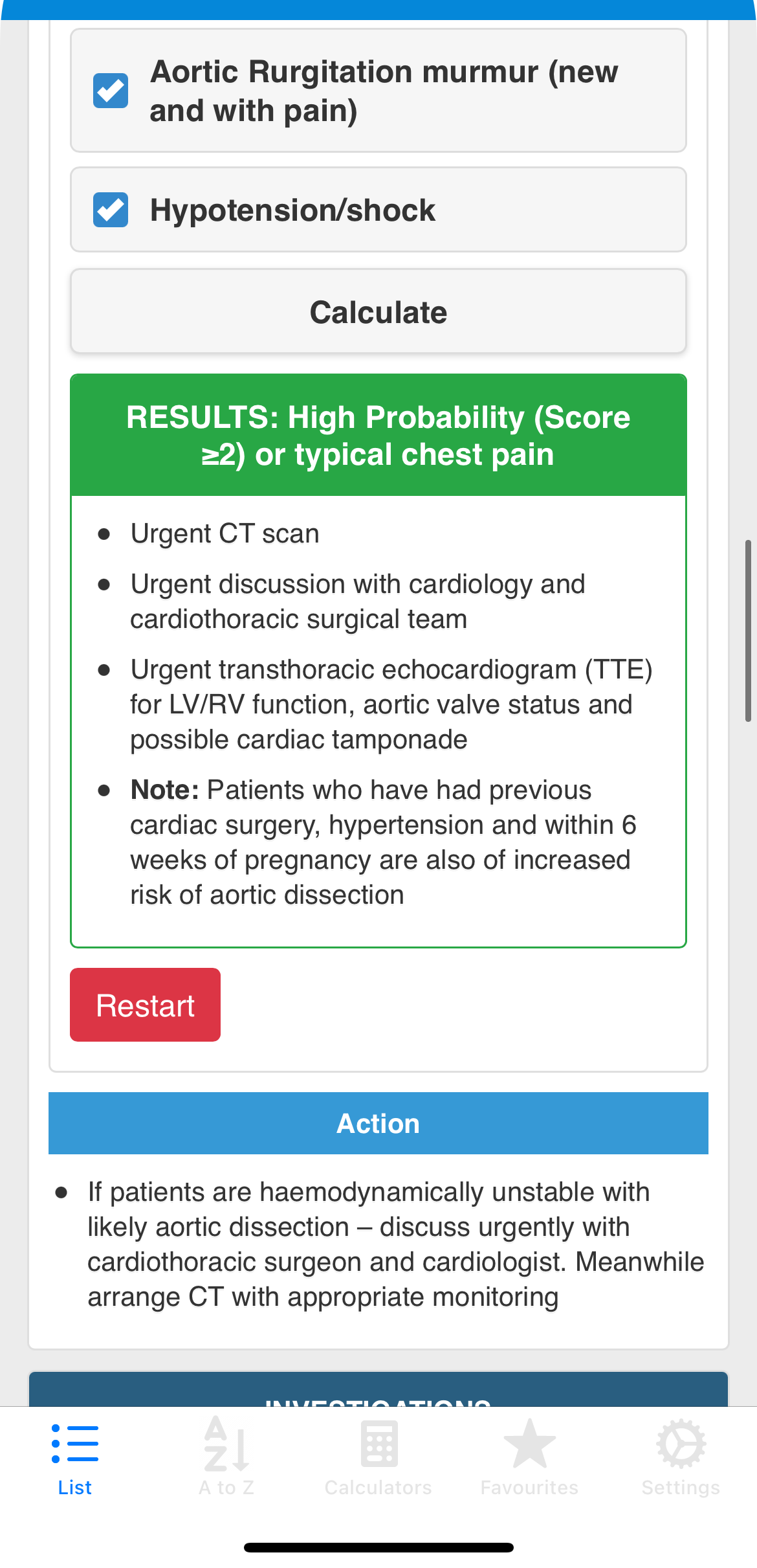
Clinical decision tools, built in.

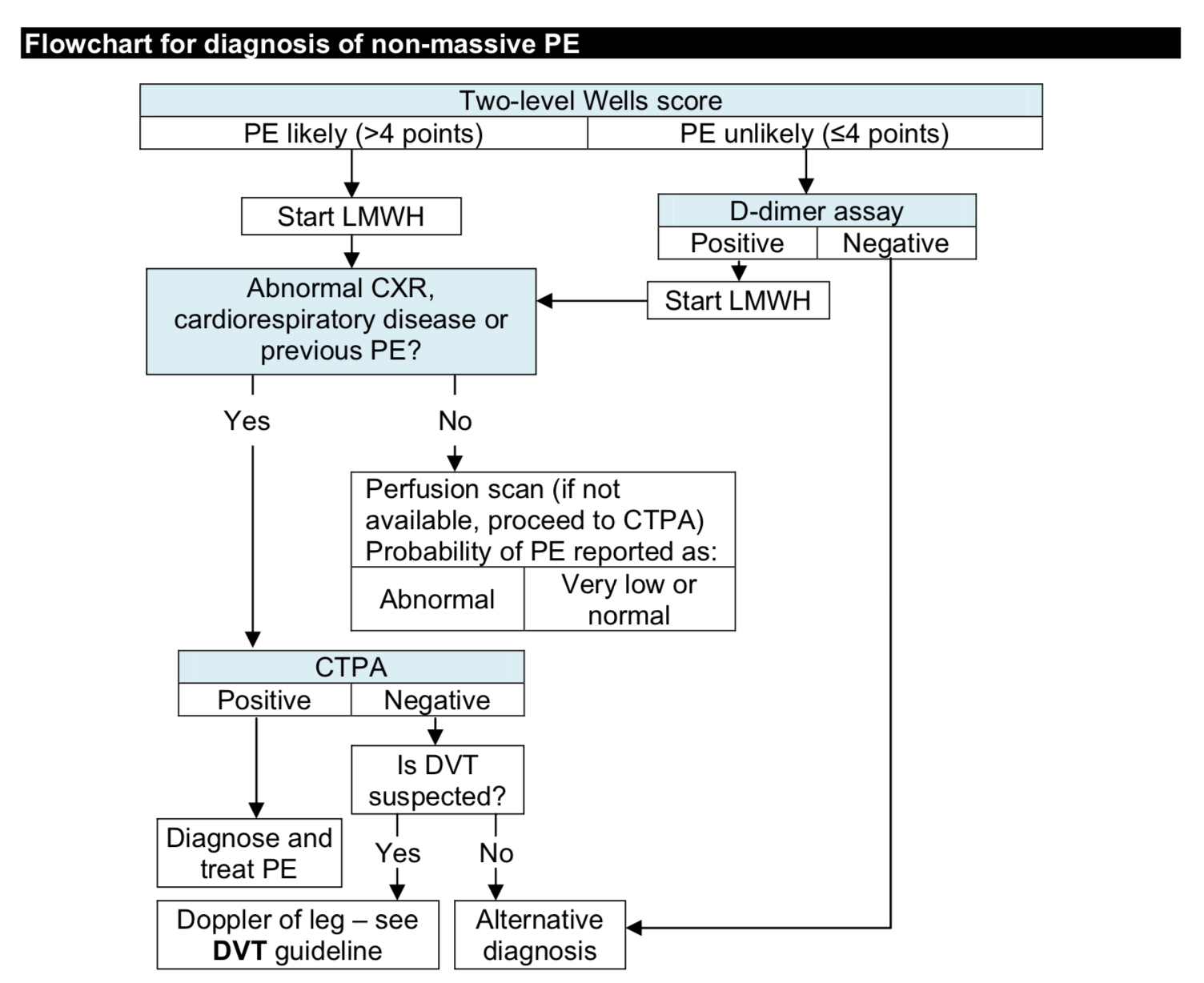
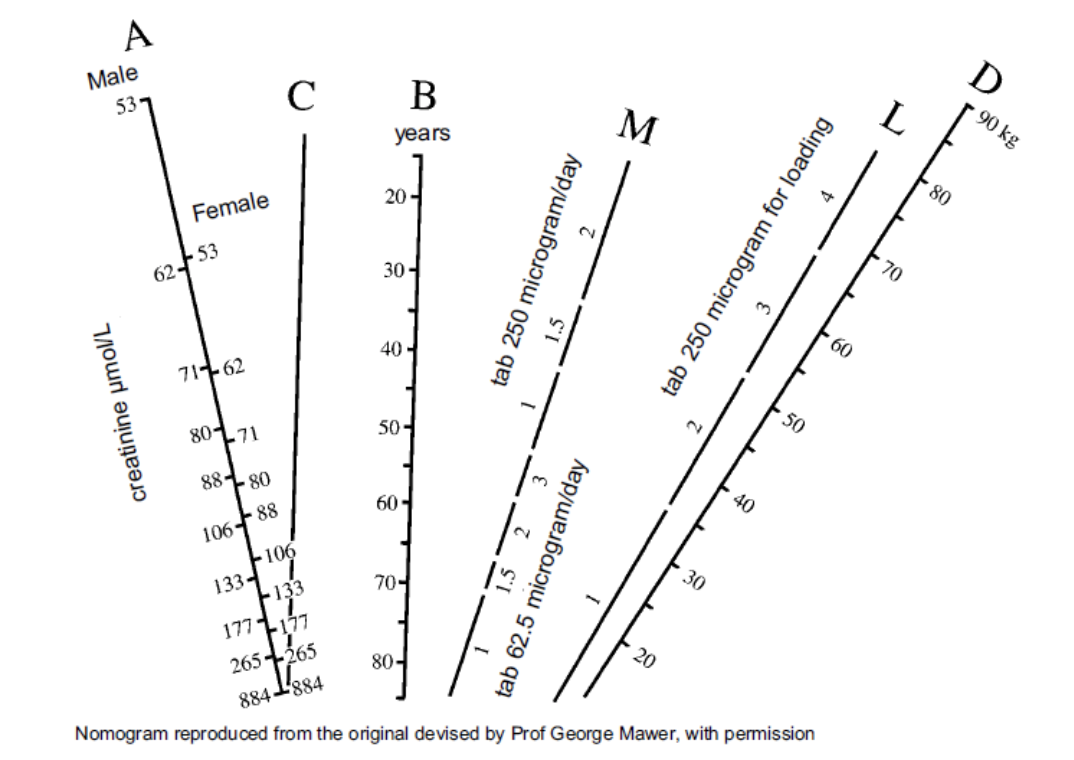
Diagnostic scoring tools run natively inside the app. Check criteria, calculate risk scores, get immediate action recommendations — no switching apps, no losing guideline context.

9:59
Infective Endocarditis
Diagnostic criteria
• See Duke classification
Open Dukes Classification Tool
Immediate Treatment
• Once diagnosis confirmed, arrange transfer to cardiology ward with on-call team
• In an ill patient, after blood cultures taken, do not wait for results. Start empirical treatment
Check blood cultures taken
Penicillin Allergy
List
A to Z
Calc
Favs
Options

04 — Protocols

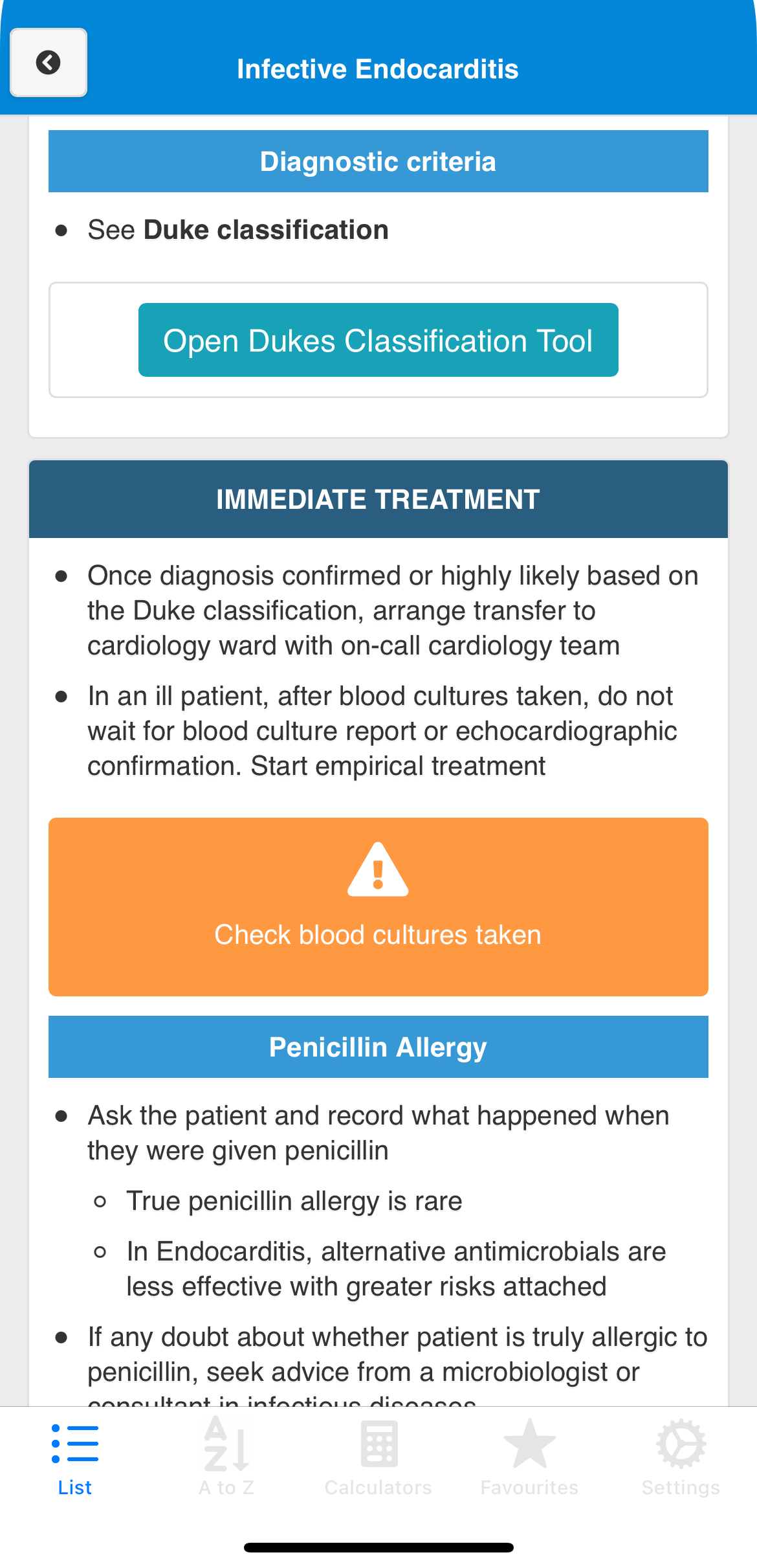
Immediate actions, immediately visible.

Time-critical steps are visually prioritised. Urgent action prompts and structured treatment sequences were co-designed with respiratory physicians and emergency nurses through usability testing.

Key Findings

What clinicians actually need.

Three findings from across the UCD process recurred consistently and shaped the final design recommendations.

01

Minimal-tap navigation

Clinicians need to reach the correct guideline in 2–3 taps. Deep hierarchies and nested menus fail in busy clinical contexts. The card sorting data directly determined the two-level navigation model adopted in the final app.

02

Offline-first architecture

Wi-Fi is unreliable on wards. Network dependency is a critical usability failure in clinical settings — identified directly through contextual inquiry. All content was bundled locally, eliminating any dependency on hospital network connectivity.

03

Typography & visual density

Information density, font size, and contrast matter when reading on a phone under bright ward lighting or while wearing gloves. Small screens in clinical environments demand deliberate visual design decisions absent from general mobile UI guidance.

Publications

5 papers. 15 recommendations.

Each paper maps to a stage of the UCD process, building from contextual requirements through design to physiological evaluation.

The Development of a Point of Care Clinical Guidelines Mobile Application Following a User-Centred Design Approach

Mitchell et al. (2020) · BCS HCI Conference

DOI →

15 Usability Recommendations for Delivering Clinical Guidelines on Mobile Devices

Mitchell et al. (2021) · 34th British HCI Conference

DOI →

Design Recommendations for Presenting Clinical Guidelines on Mobile Devices

Mitchell et al. (2022) · Studies in Health Technology and Informatics

DOI →

Applying Recommendations and Working with Clinical Experts to Understand, Adapt, Verify, and Validate Clinical Information for Mobile Delivery

Mitchell et al. (2022) · 35th BCS HCI Conference

DOI →

Using Physiological Signals to Measure the Quality-of-Experience of Health Care Professionals when Interacting with a Clinical Guideline Mobile App

Mitchell & Kanwal (2022) · 35th BCS HCI Conference

DOI →
K

Keele University

School of Medicine · Staffordshire, UK

NHS

UHNM NHS Trust

University Hospital North Midlands · Stoke-on-Trent

PhD

Research

NHS

Trust

15

Recommendations

5

Papers