Active Project · iOS

MedWatch

Postoperative ambulatory monitoring — from the patient's home to the clinician's hands.

A Swift-based iOS application that collects patient-reported outcomes and wearable sensor data during home recovery, then surfaces structured summaries and threshold alerts for clinical teams to review between scheduled follow-ups.

MedWatch · Recovery Portal

Recovery Summary

5 patients · updated 4 min ago

1 ALERT
REVIEW
Patient · Last symptom
HR trend
Status
SC
S. Chen Day 3 post-op

Reported: incision redness, fever 38.4°C

ALERT
MR
M. Rivera Day 7 post-op

Reported: mild fatigue, pain 4/10

REVIEW
TW
T. Williams Day 10 post-op

Reported: pain 1/10, activity improving

STABLE
AK
A. Kumar Day 5 post-op

Reported: no concerns, sleep improving

STABLE
LP
L. Park Day 14 post-op

Reported: returned to light activity

STABLE

The Problem

Complications don't wait for follow-up appointments.

After discharge, patients recover at home for days or weeks before their next clinical contact. Complications — surgical site infections, respiratory decline, wound dehiscence — can develop silently in that window with no mechanism for the care team to know.

MedWatch closes the gap by turning the patient's smartphone and wearable into a passive reporting channel, giving clinicians structured data to act on without requiring the patient to travel back to the clinic.

Current Care Gap

No visibility post-discharge

Once a patient leaves the hospital, clinicians have no systematic view of how recovery is progressing at home.

Delayed symptom reporting

Patients often wait days before calling a provider — by which point minor complications have escalated.

Unplanned readmissions

Without structured home monitoring, preventable complications drive costly emergency returns and 30-day readmissions.

How It Works

From home recovery to clinical action.

01

Patient Reports Symptoms

Once daily, patients log pain scores, wound observations, and functional status through the MedWatch iOS app — prompted by a gentle notification.

02

Wearable Syncs Passively

Apple Watch data — heart rate, resting HR trends, activity, SpO₂ — is pulled automatically via HealthKit without any manual action from the patient.

03

Server Aggregates & Scores

Reported outcomes and wearable trends are combined into a per-patient recovery score. Threshold rules flag combinations that warrant clinical attention.

04

Clinician Reviews & Acts

The clinician dashboard surfaces alerts and recovery summaries. The team can triage remotely — calling the patient, adjusting medications, or scheduling an urgent visit — without waiting for the next appointment.

Key Features

Built for clinical workflows.

Threshold-Based Alerting

Clinician-defined rules trigger push notifications when symptom scores or wearable trends breach per-patient thresholds — enabling action before a complication escalates.

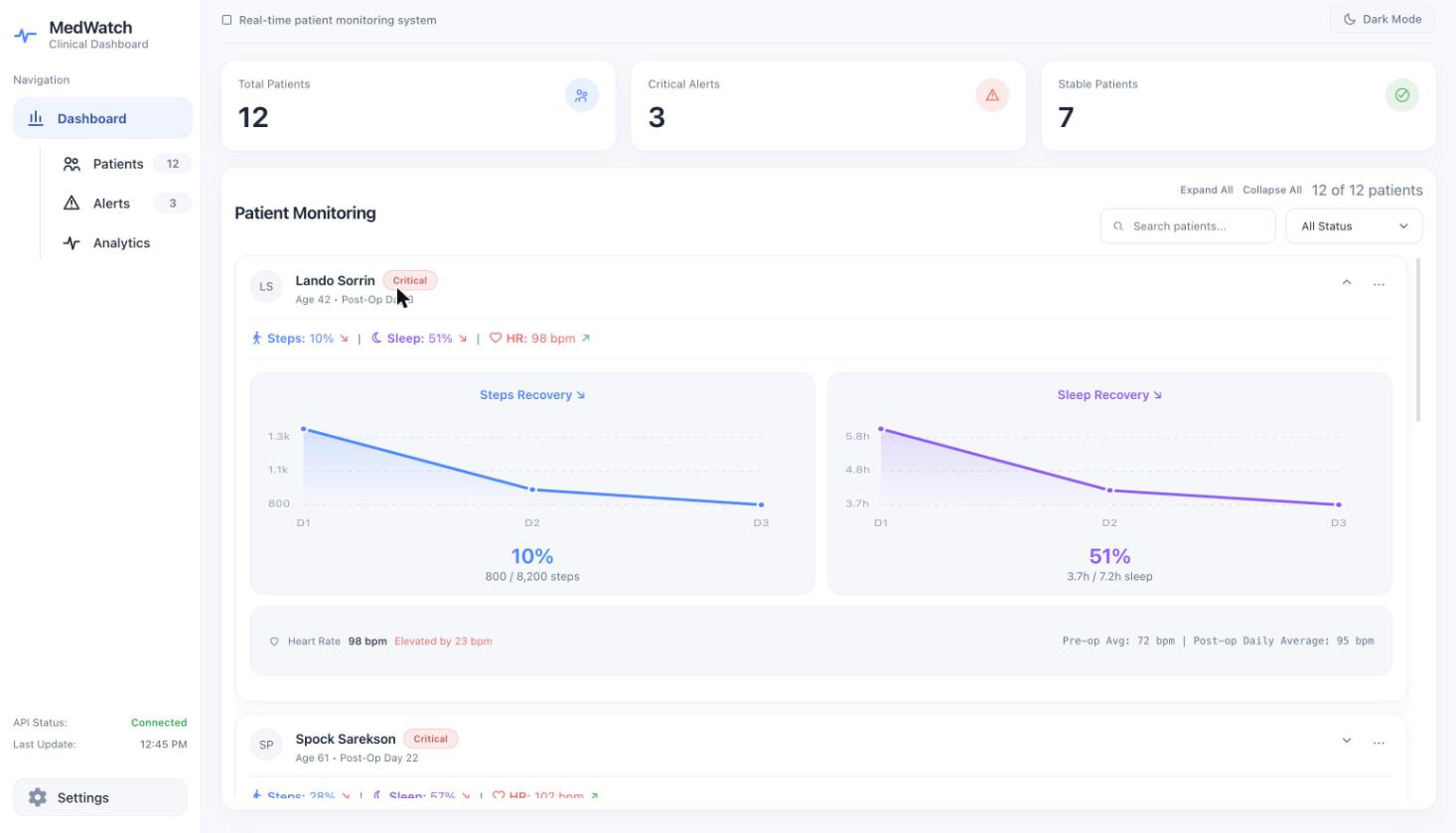
Recovery Trend Visualization

Native SwiftUI charts display daily symptom scores alongside wearable-derived trends over the full recovery period, making trajectory changes visible at a glance.

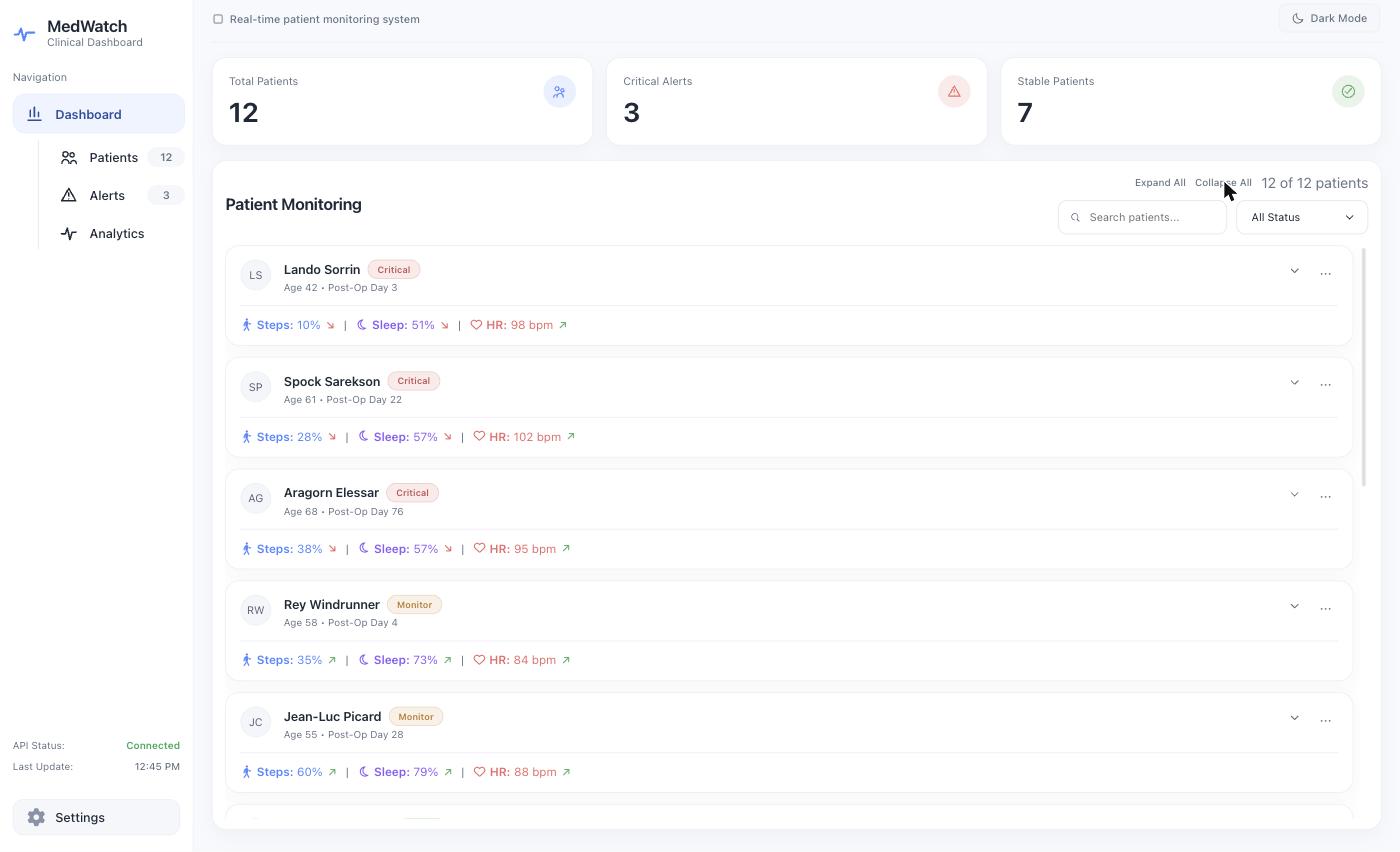
Multi-Patient Recovery Dashboard

Clinicians manage an entire panel of recovering patients from a single prioritized view — acuity-sorted so the patients who most need attention surface immediately.

Secure HealthKit Integration

Full Apple HealthKit integration with end-to-end encryption. Wearable data is collected passively and remains within the institution's secure environment.

Why It Matters

The recovery period is a blind spot.

Most postoperative complications manifest at home, not in the hospital. Structured remote monitoring creates the visibility needed to intervene early.

Post‑Op

Home Recovery Focus

iOS Native

Swift · HealthKit

PRO + Sensor

Dual Data Sources

Active

Project Status